How NonDets is changing the future of the Civil and Mining Industries
Underground construction work includes tunnelling for roads, highways and railroads and laying pipelines for sewers, hot water, steam, electrical conduits, telephone lines. Hazards in this work include hard physical labour, crystalline silica dust, cement dust, noise, vibration, diesel engine exhaust, chemical vapours, radon and oxygen-deficient atmospheres. Occasionally this work must be done in a pressurized environment. Underground workers are at risk for serious and often fatal injuries. Some hazards are the same as those of construction on the surface, but they are amplified by working in a confined environment. Other hazards are unique to underground work. These include being struck by specialized machinery or being electrocuted, being buried by roof falls or cave-ins and being asphyxiated or injured by fires or explosions. Tunnelling operations may encounter unexpected impoundments of water, resulting in floods and drowning.
The construction of tunnels requires a great deal of physical effort.
Energy expenditure during manual work is usually from 200 to 350 W, with a great part of static load of the muscles. Heart rate during work with compressed-air drills and pneumatic hammers reaches 150 to 160 per minute. Work is often done in unfavourable temperature and humid microclimatic conditions, sometimes in cumbersome work postures. It is usually combined with exposure to other risk factors which depend on the local geological conditions and on the type of technology used. This heavy workload can be an important contribution to heat stress.
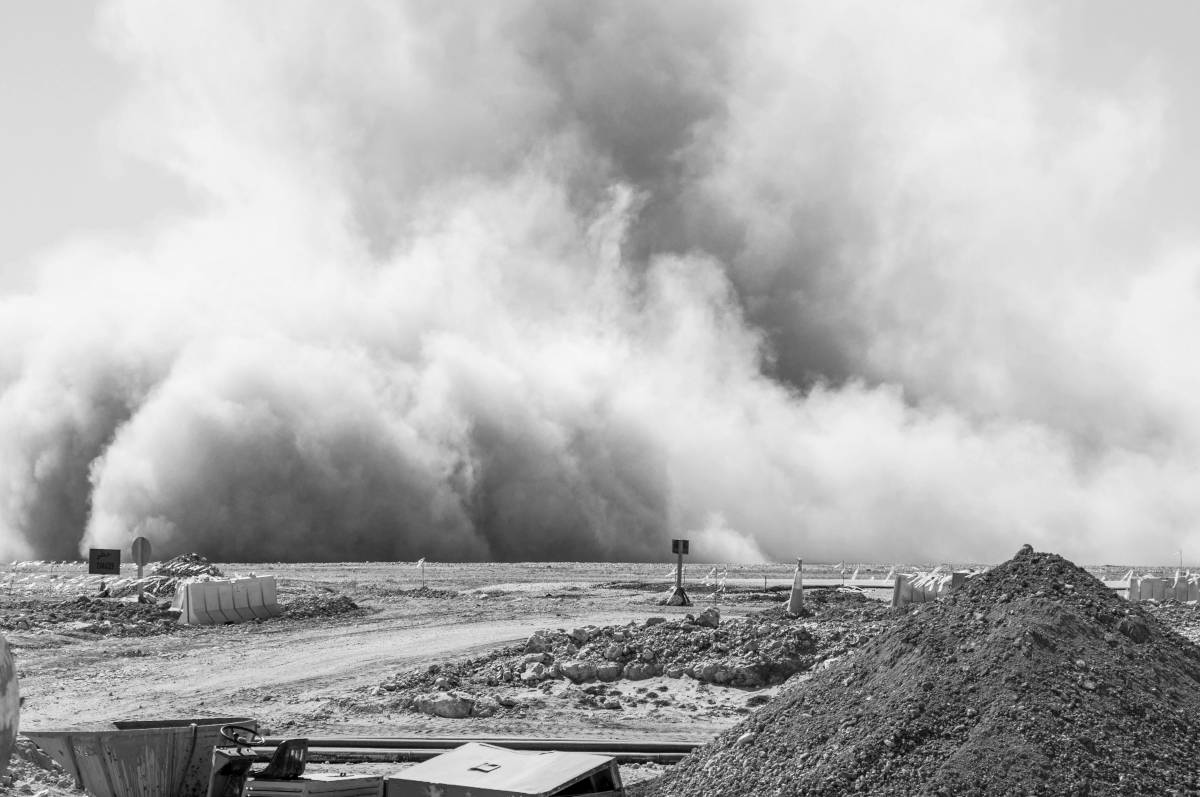
Avoid the negatives associated with traditional detonation
The need for heavy manual labour can be reduced by mechanization. But mechanization brings its own hazards. Large and powerful mobile machines in a confined environment introduce risks of serious injury to persons working nearby, who may be struck or crushed. Underground machinery also may generate dust, noise, vibration and diesel exhaust. Blasting generates not only flying debris, but also dust and nitrogen oxides.
To prevent excessive exposure, the customary procedure is to prevent re-entry to the affected area until the dust and gases have cleared. A common procedure is to blast at the end of the last work shift of the day and to clear out debris during the next shift. Cement dust is generated when cement is mixed. This dust is a respiratory and mucous membrane irritant in high concentrations, but chronic effects have not been observed. When it settles on skin and mixes with sweat, however, cement dust can cause dermatoses. When wet concrete is sprayed in place, it too can cause dermatoses.
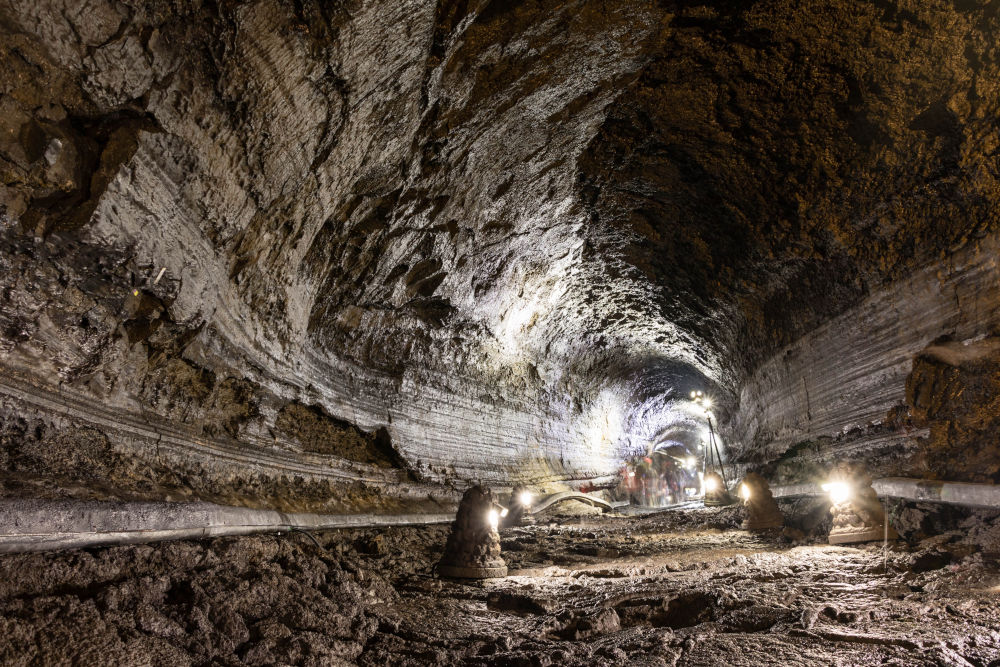
Noise can be significant in underground construction work. Principal sources include pneumatic drills and hammers, diesel engines and fans. Since the underground work environment is confined, there is also considerable reverberant noise. Peak noise levels can exceed 115 dBA, with time-weighted average noise exposure equivalent to 105 dBA. Noise-reducing technology is available for most equipment and should be applied. The construction of vertical shafts using mining technology poses similar health problems to those of tunnelling. In terrain where organic substances are present, products of microbiological decomposition may be expected.
How can we prevent this?
Prevention of exposure to dust should in the first place be implemented by technical means, such as wet drilling (and/or drilling with LEV), wetting of the material before it is pulled down and loaded to the transport, LEV of mining machines and mechanical ventilation of tunnels. Technical control measures may not be sufficient to lower the concentration of respirable dust to an acceptable level in some technological operations (e.g., during drilling and sometimes also in the case of wet drilling), and therefore it may be necessary to supplement the protection of the workers engaged in such operations by the use of respirators. The efficiency of technical control measures must be checked by monitoring the concentration of airborne dust. In the case of fibrogenic dust, it is necessary to arrange the programme of monitoring in such a way that it allows the registration of the exposure of individual workers.
The individual exposure data, in connection with data about each worker’s health, are necessary for the assessment of the risk of pneumoconiosis in particular work conditions, as well as for the assessment of the efficiency of control measures in the long-run. Last but not least, the individual registration of exposure is necessary for evaluating the ability of individual workers to continue in their jobs. Exposure to chemical substances can be influenced by the selection of appropriate technology (e.g., the use of formaldehyde resins and formamide should be eliminated), by good maintenance (e.g., of diesel engines) and by adequate ventilation. Organization and work regime precautions are sometimes very effective, especially in the case of the prevention of dermatoses. Work in underground spaces in which the composition of the air is not known demands strict adherence to safety rules. Entering such spaces without isolating breathing apparatuses must not be allowed. The work should be done only by a group of at least three people—one worker in the underground space, with breathing apparatus and safety harness, the others outside with a rope to secure the inside worker. In case of accident it is necessary to act quickly. Many lives have been lost in efforts to save the victim of an accident when the safety of the rescuer was disregarded. Prior to ground-breaking for underground work, the site should be inspected and soil samples should be taken in order to plan the excavation. Once work is underway, the work site should be inspected daily to prevent roof falls or cave-ins. The workplace of solitary workers should be inspected at least twice each shift and fire suppression equipment should be strategically placed throughout the underground work site.
What Solution can be implemented?
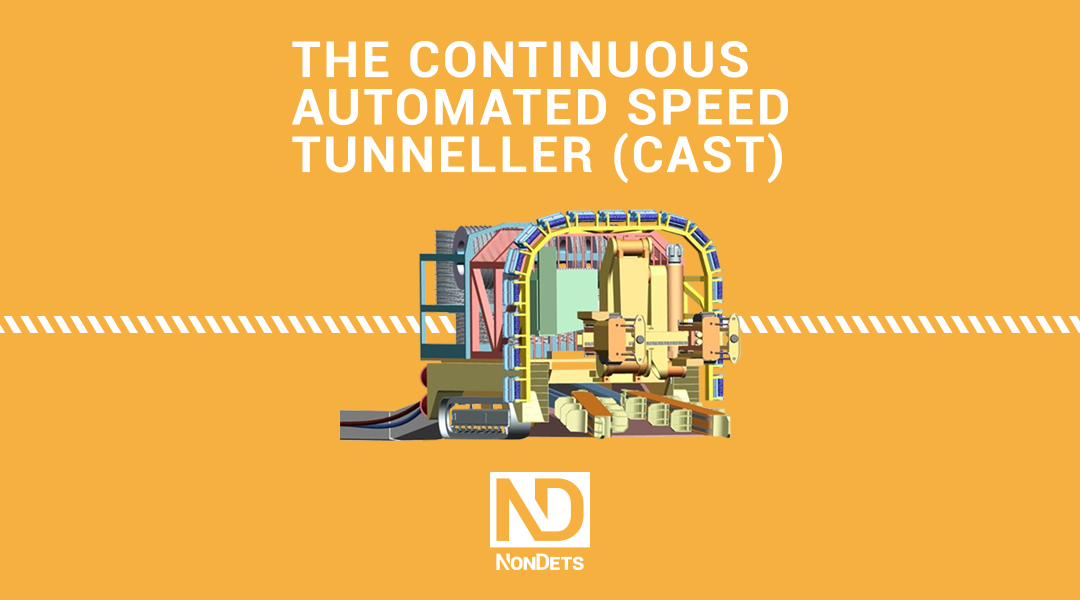
The Continuous Automated Speed Tunneller (CAST) A robot that automates the entire drilling and blasting operation by using patented deflagration cartridges that are far safer and eco-friendly. Drilling and blasting operations can now be automated by using the newly developed deflagrating cartridges. The cartridges are loaded into a magazine on the CAST machine and that is then loaded into the drilled holes and fired by the loading arm. Once the actual deflagration has occurred, the broken rock is loaded onto a conveyor belt and removed immediately after the blast. Laser sensors on the CAST will automatically measure the tunnel structure as well as any gases (methane) in the tunnel. Rock is analysed continually, and results are sent to the data centre in the control hub. Optical observations (cameras) allow 3D modelling of the tunnel and operations. The operation is controlled by software applications from the control centre where personnel is able to observe the operations via their smart phone or device. The CAST operation always allows for a continues removing of rock from the face and the speed of the tunnelling operation depends on the speed the rocks are removed from the face and the tunnel. Present tunnelling machines are very costly and can only drill in one direction. The CAST can turn as small as a 5m radius. This means that’s in present mining operations the CAST robot can create a 3,2×3,2m tunnel at a rate of 10m per day, whereas the current method (hand drill and blast) can only achieve 1,2 m per day in gold mining operations.
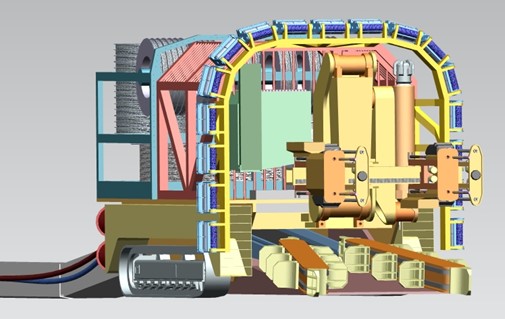
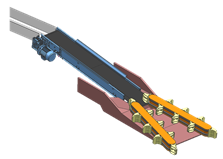
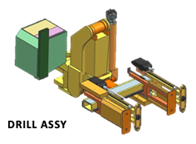
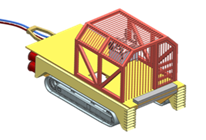
The CAST robot consists of modular units that can be added to optimise the operations that are needed for a specific project. At NonDets we continually strive to improve the technology and future development will focus on a system that will be able to “manufacture” a safe chemical breaking mechanism, directly on the CAST platform. The CAST robot will manufacture its own “deflagrating explosive” on board. It will then determine the amount of energy needs to break the rock successfully and will then “manufacture” the correct “cartridge size” for breaking the rock successfully and continuously.